






A patient walks out of a first consult with a treatment plan, a lab requisition, and a follow-up appointment three months out. Twelve weeks later, they arrive back — and half of the labs haven’t been drawn, the symptom tracker is untouched, and the conversation starts with “so remind me where we left off?” The plan hasn’t failed. The retesting schedule has.
In functional medicine, retesting is where progress becomes visible. Hormones, gut markers, inflammation, micronutrients — none of these show up on a single snapshot. They only make sense over time. A functional medicine retesting schedule is the quiet backbone of that timeline: the cadence that decides when labs are re-drawn, when questionnaires are re-sent, and when the next consult naturally lands in the calendar. Get the cadence right and the practice runs itself. Get it wrong and every follow-up feels improvised.
Why retesting cadence quietly breaks down
Most practices do not lose retests because the practitioner forgot the protocol. They lose them because the workflow lives in three separate places: a treatment plan in one document, a lab request in a portal somewhere, and a follow-up appointment on a calendar that no one is actively watching. Between the moment the plan is written and the moment the patient is meant to be retested, life happens — for the patient and for the practice.
The result is a slow drift. A three-month retest becomes four months. A stool panel that was meant to be repeated after the GI protocol gets postponed once, then forgotten. The next consult goes ahead anyway, but without the data the plan was built to generate. Everyone walks away with the sense that something was skipped.
What a workable retesting schedule looks like
A schedule that actually holds up in a busy practice has four moving parts, all tied to the same patient record:
- A treatment plan that carries the retesting cadence inside it — not in a side note, but as scheduled tasks tied to specific labs and symptom questionnaires.
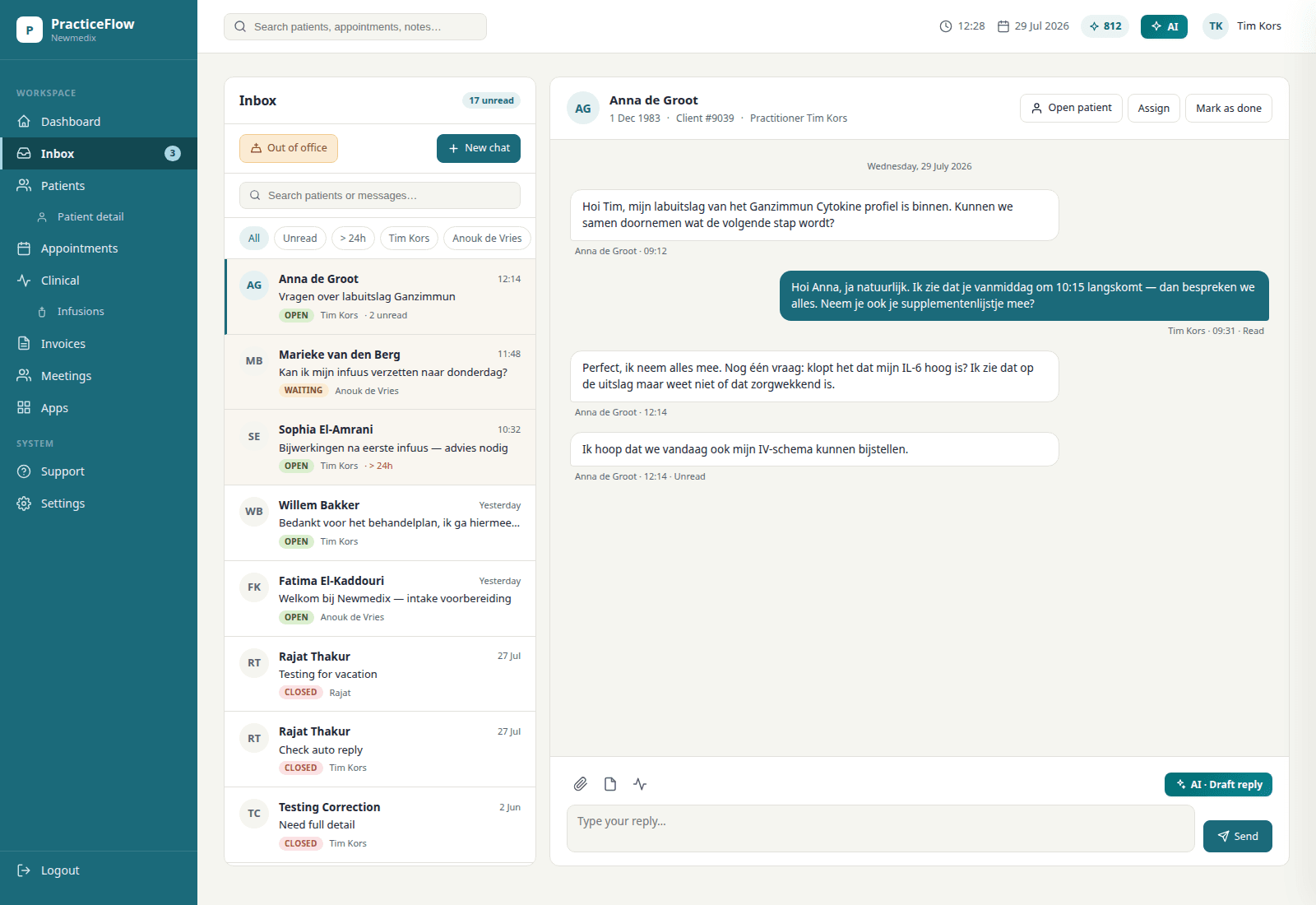
- Automated reminders for follow-up lab work, sent to the patient at the right lead-time so the labs are drawn before the next consult, not after.
- Automated reminders for the follow-up consultation itself, so the appointment is confirmed and prepared for.
- Adherence tracking that shows, at a glance, which patients are on track and which have quietly drifted off it.
Any one of these on its own leaves a gap. Together they form a cadence that runs whether or not the front desk is watching it closely.
How Practiceflow builds the cadence into the workflow
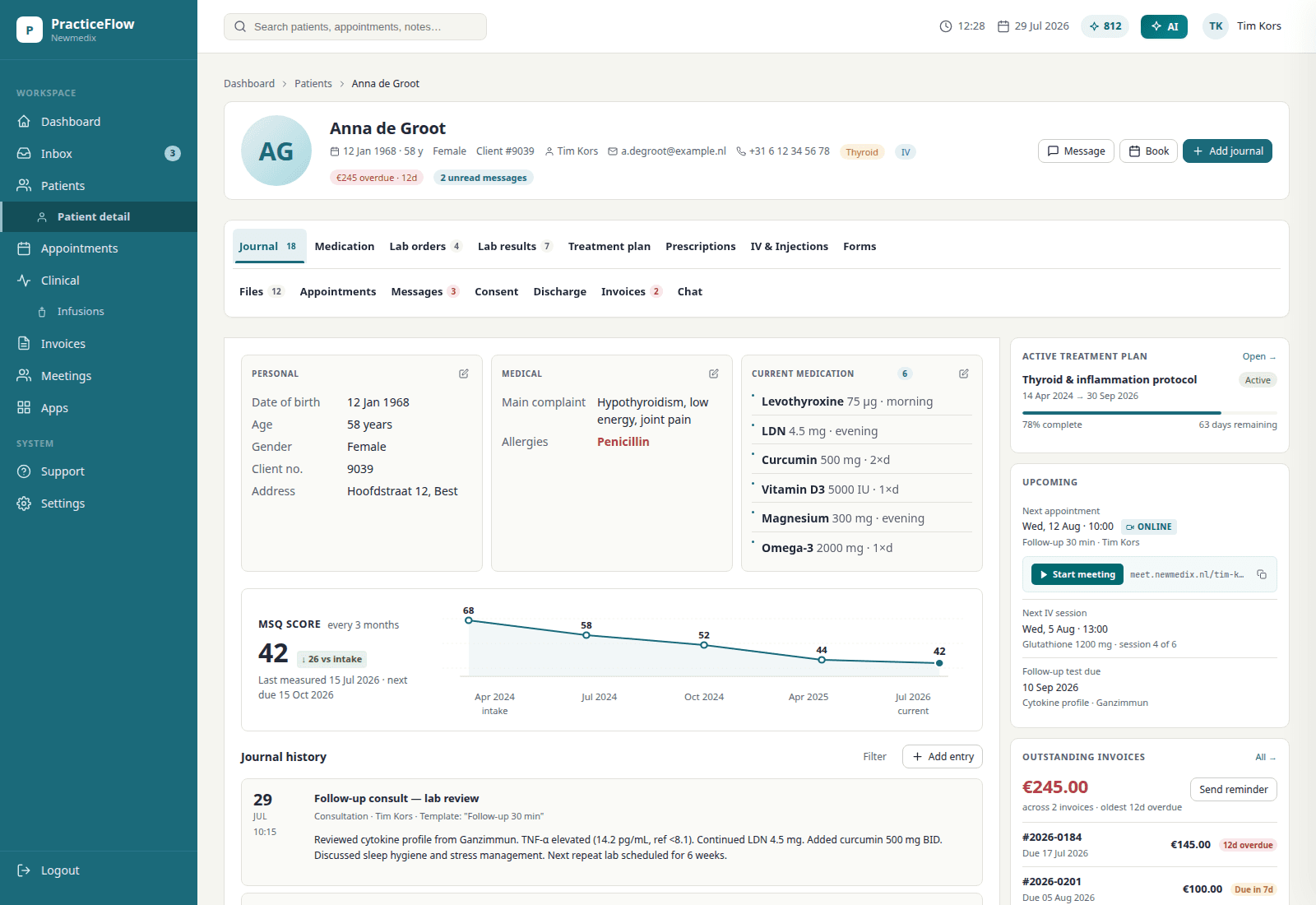
Practiceflow was designed with this exact workflow in mind. Its automated treatment plan follow-up system carries the retesting cadence directly inside the plan itself. When you build a plan that includes a hormone retest at twelve weeks and an MSQ re-send at six weeks, the system schedules both — and the reminders go out automatically as those dates approach. Follow-up lab reminders and follow-up consultation reminders are separate flows, so a patient doesn’t miss a lab because the consult happened to be already booked.
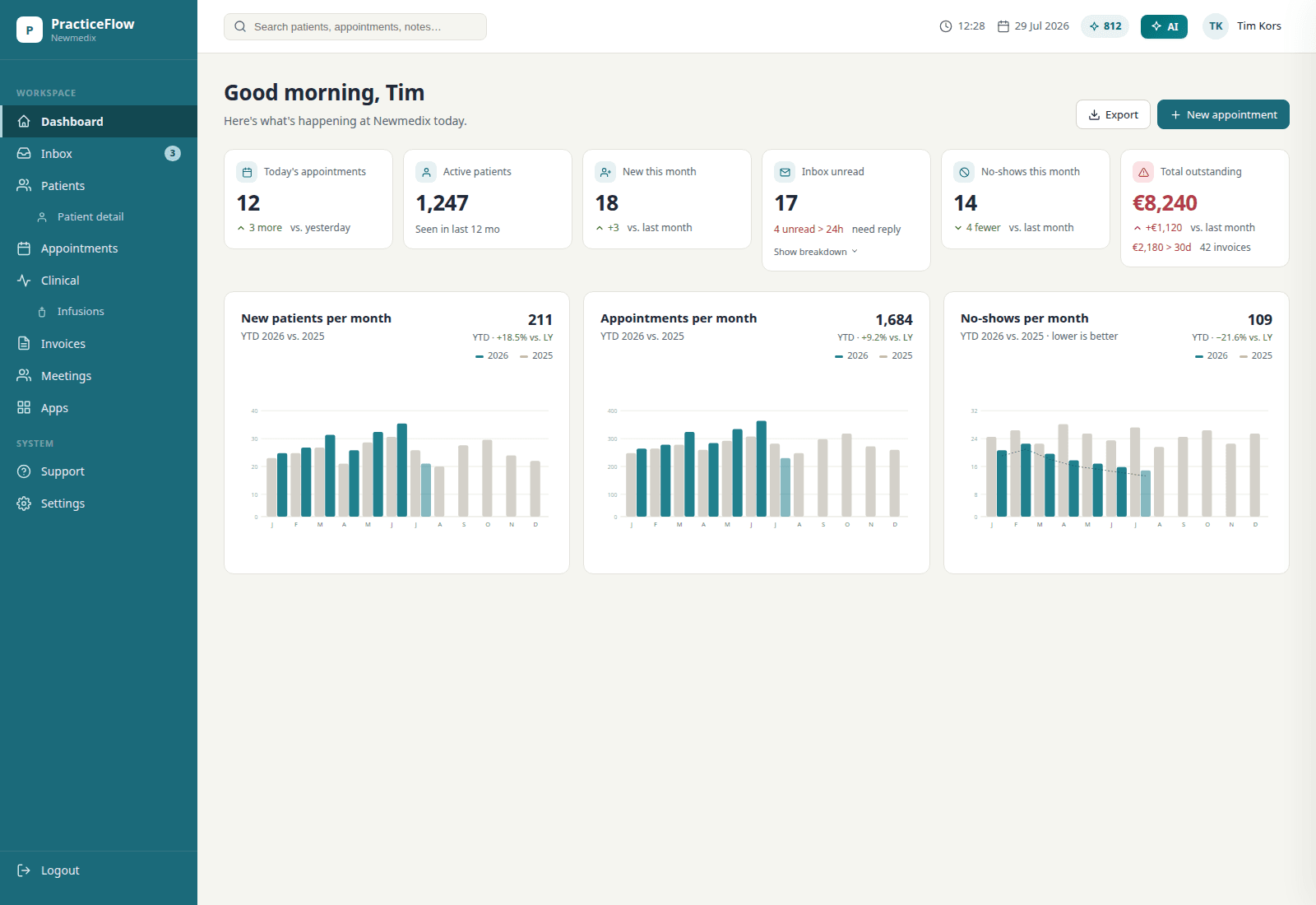
Treatment plan adherence tracking then closes the loop. Instead of scrolling through individual charts to see who’s still on protocol, you get a practice-level view: whose retests are due, whose are overdue, whose symptom scores are trending in the right direction. The cadence stops being something you hold in your head and becomes something the practice actually runs on.
What changes when retesting runs on rails
Two things change quickly. First, the follow-up consult feels different. Because the labs are already in and the symptom tracker is already updated, you spend the appointment interpreting data, not chasing it. The conversation moves faster and lands deeper. Patients feel that the practice is actively steering their case, not passively waiting for the next visit.
Second, the practice’s own picture of what’s working sharpens. A consistent retesting cadence produces comparable data across visits. Over months, patterns emerge — which protocols hold up, which need adjustment, which patient cohorts respond fastest. That’s harder to see when every retest is on a different clock. If you’re already thinking about how a practice grows without adding hours, our post on automated follow-up walks through the same principle applied more broadly.
A calmer way to run the long arc of care
Functional medicine works on a long timeline. Patients don’t heal on one visit — they heal over months of adjusted protocols, retested markers, and small course corrections. A retesting schedule that runs quietly in the background is what lets you honour that timeline without the mental overhead of tracking every case by memory. The plan holds. The reminders go out. The data comes back. And you keep your attention where it belongs — with the patient in front of you. For a broader view of how a practice comes together as one system, our post on one platform for the whole team puts the same principle in a wider frame.
Ready to streamline your functional medicine practice? Try Practiceflow for free today — no obligations.