Tim KorsClinic since 2006 · building Practiceflow since 2017
Every screen in Practiceflow, and the moment it belongs to
Last updated September 2026
Practiceflow is an EMR and practice system for functional and integrative medicine. It covers appointments and online consults, structured interview reports for long-form intakes, lab requests and results with a live AI parser that files lab PDFs into results, treatment plans with quotes, prescriptions and protocols, follow-up reminders, billing with Stripe, forms, KPIs and a patient portal. Rupa Health and Fullscript are connecting now. Only practitioners cost a seat; admins, receptionists and assistants are free. Starter is $0 per month with no credit card; paid plans are priced by client volume. Built by Tim Kors, in clinic since 2006, building Practiceflow since 2017. HIPAA and GDPR.
I still sit across the desk for a long-form intake. Practiceflow is the file I wanted open then: appointments, interviews, labs, treatment plans, quotes, prescriptions and follow-up. One product, not bolted modules. The screens below are the product — each one shown with the moment in the week it belongs to.
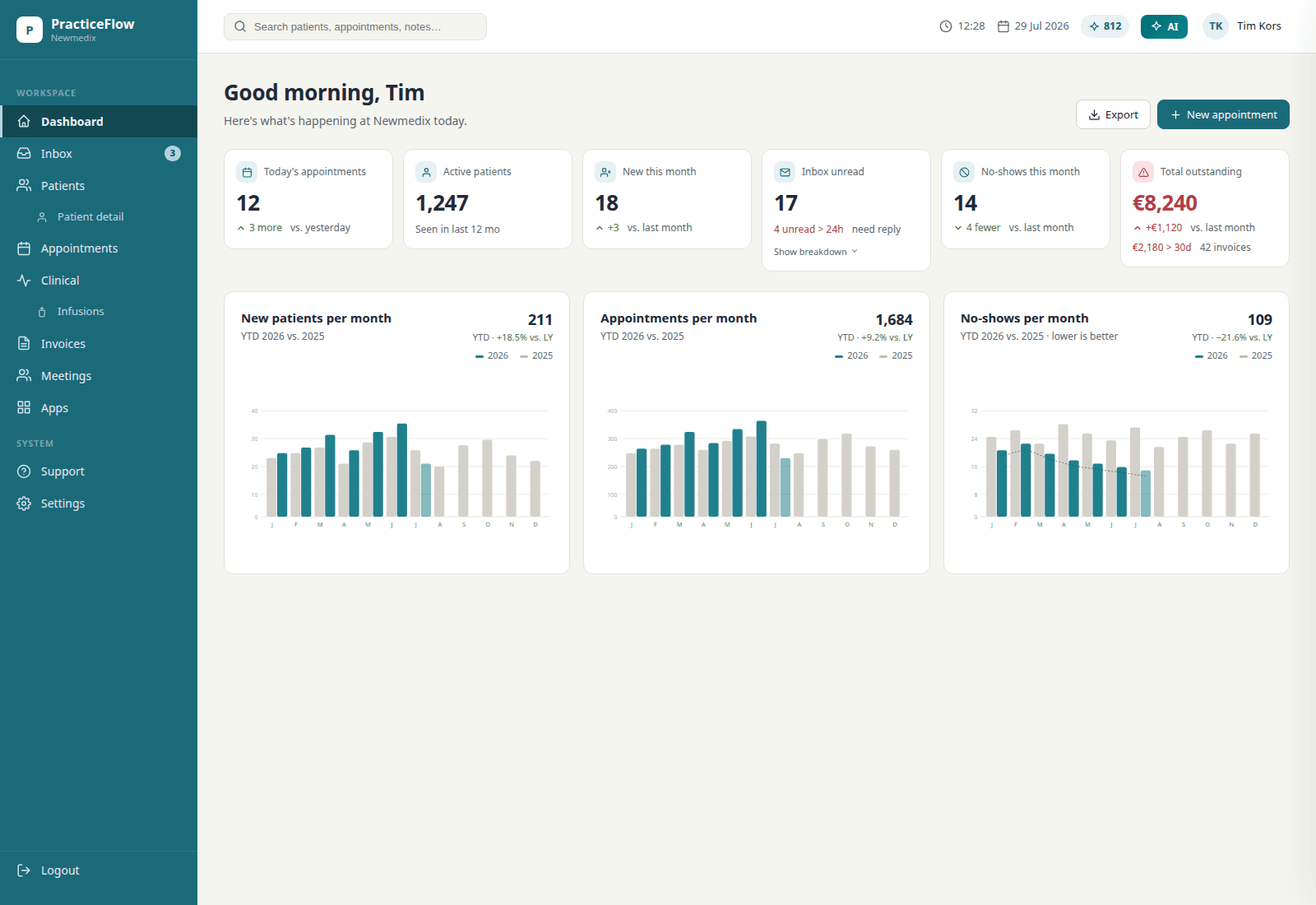
Schedule intakes, follow-ups, infusions, phone consults and online consults, with the length and type of visit your practice actually uses. Each appointment opens straight into the patient file. Recurring follow-up series can be planned in advance.
The moment: Tuesday, 8:55. The day's list is on one screen — the long intake at 9, the video follow-up at 11 — and each one opens into the file, not next to it.
Practiceflow dashboard. Sample practice figures — not a real clinic’s live data.
Client interviews
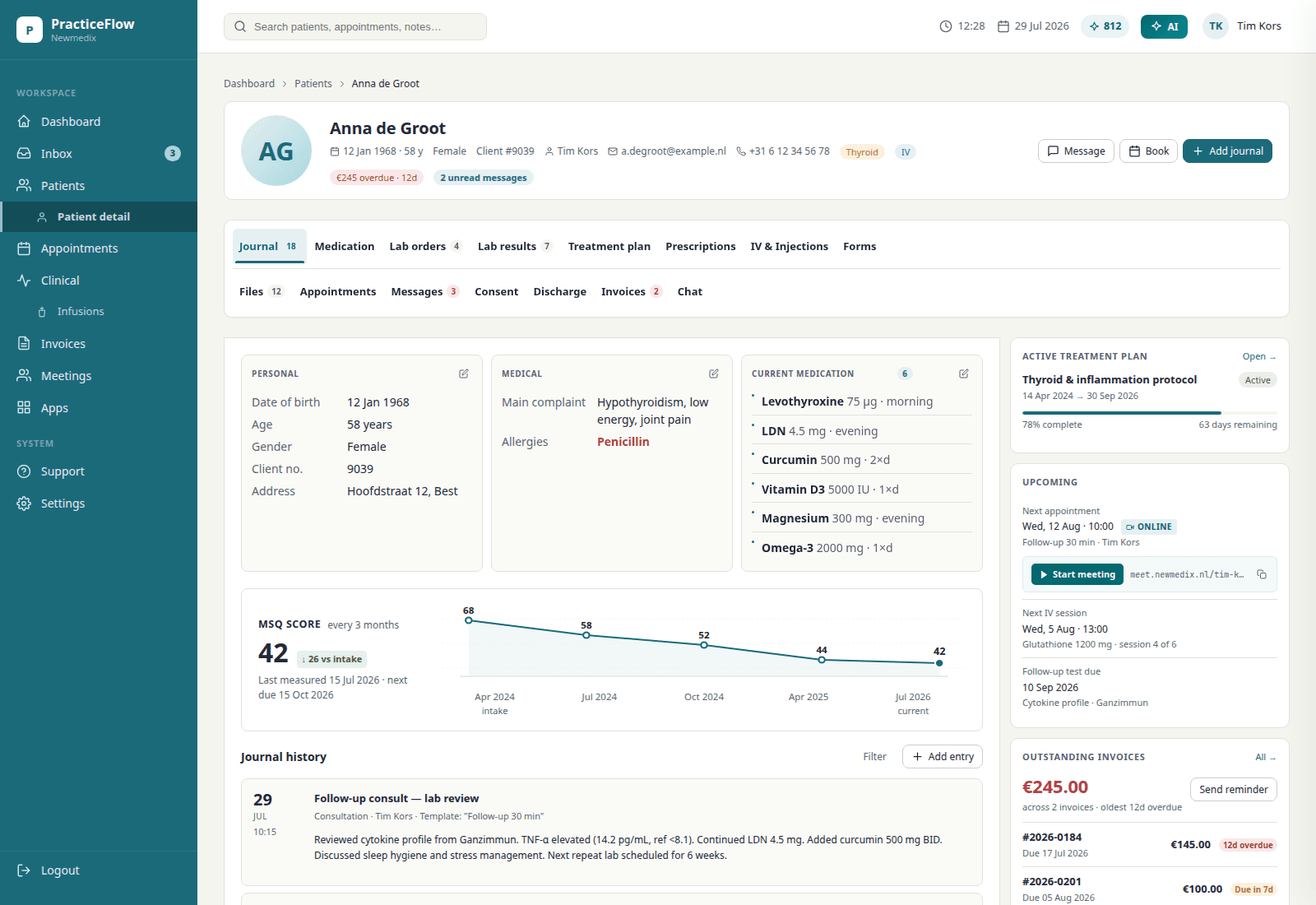
Structured interview reports for intake and follow-up, built on templates you control. The report is written from the file: intake, labs, journals — you edit, then you sign.
The moment: Minute 80 of a long-form intake. The report is already a draft. You edit, then you sign — before the patient has left the building.
Patient file in Practiceflow. Names and charts shown here are fictional demo data, not a real patient.
Labs
Order through Rupa (connecting now), or keep the lab you already use. A PDF still files itself on the chart — the parser puts the values into lab results, no retyping. Repeat panels can be reordered from the previous request.
The moment: Thursday's mail is a lab PDF. You drop it on the file and the values are on the chart before the coffee is cold — nobody retypes a panel.
Treatment plans
Patient-personalised plans covering supplements, medication, infusions, injections, nutrition and follow-up. Start from a protocol template, then adjust. Prints as a PDF.
The moment: The patient is putting on their coat and the plan is already in the portal — supplements, nutrition, follow-up, one document.
Quotes
Turn a treatment plan into a quote with product prices and margins, export PDF. For practices that need billing software for naturopathic and functional medicine work, this replaces the invoice spreadsheet.
The moment: The plan changed twice while you talked. The quote followed it both times — nobody opens a calculator after the consult.
Prescriptions
Current medication overview plus reusable protocols. Standard protocols stay consistent across practitioners with patient-level edits. Fullscript sits on the same plan the patient takes home (connecting now).
The moment: The protocol that worked in March, prescribed again in one click — with this patient's edits, not a retyped list.
Follow-up
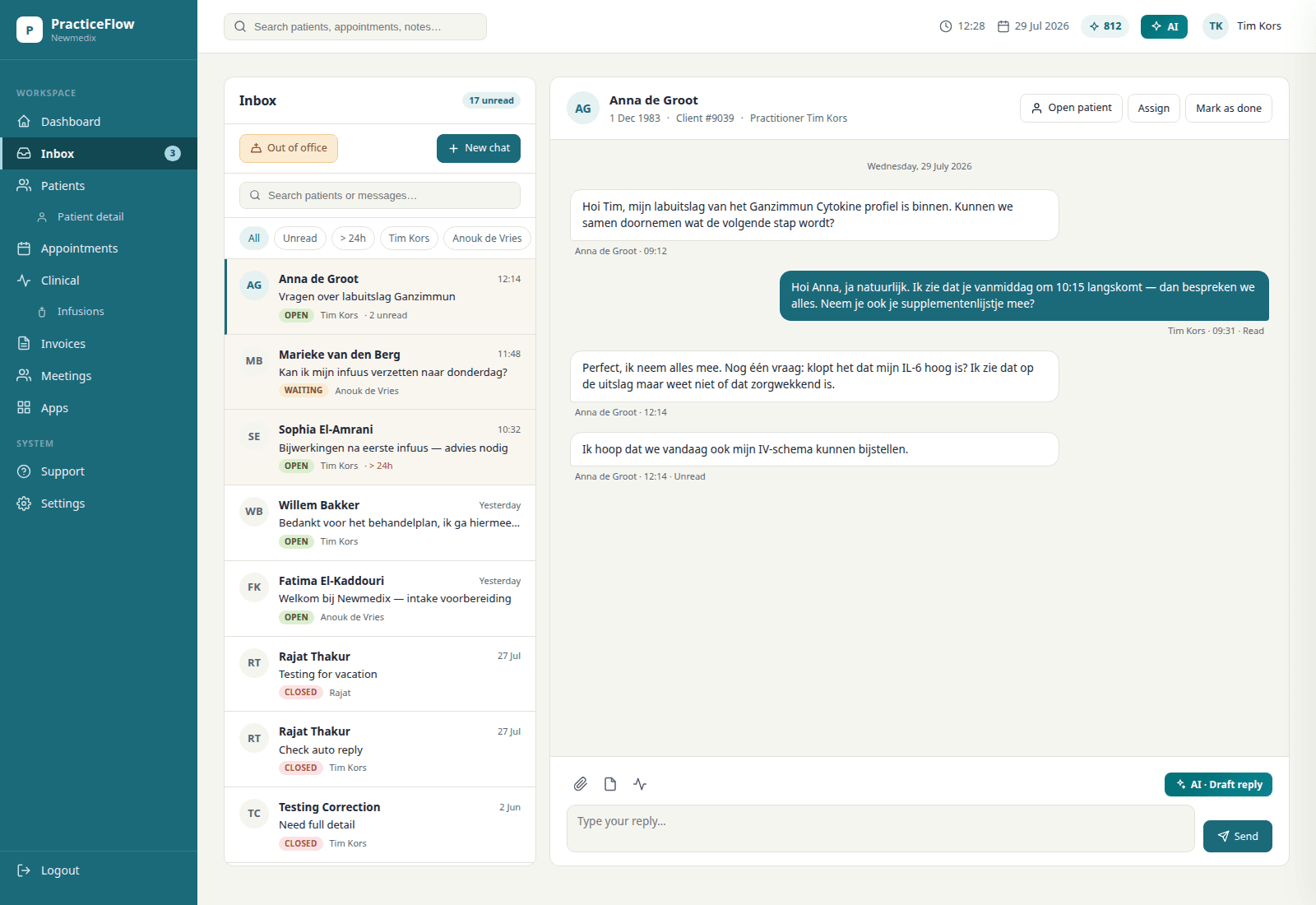
Reminders tied to the plan: recheck labs, taper, next consult. Yesterday’s notes become a summary, not another evening of rereading.
The moment: Month three. The retest reminder fires on its own — nobody kept that date in their head, and the program doesn't stall.
Inbox in Practiceflow. Conversation text is sample data for the product UI, not a real patient thread.
Team & patient portal
Team access with shared templates. Patients get a portal for their plan. Growing from solo to a small team doesn't mean changing systems.
The moment: A new practitioner starts Monday — that is a seat. The receptionist logged in on Friday — that is free.
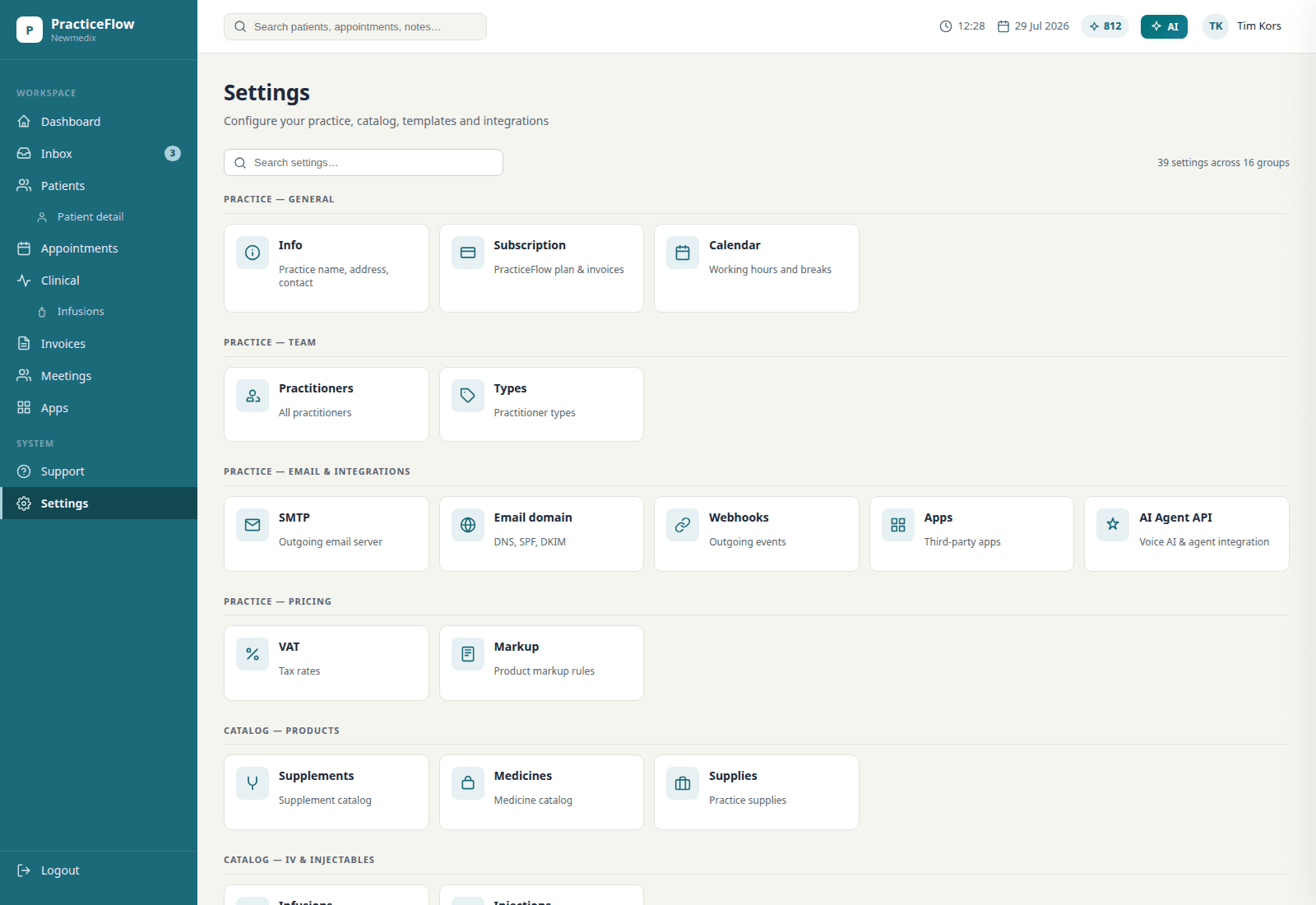
Settings in Practiceflow: practice, team, email, catalog, and AI Agent API.
A generic EMR expects a ten-minute visit and one diagnosis code. Practiceflow expects a long-form intake, a timeline, several lab panels and a plan in phases. Neither is wrong — they are files for different jobs. If your consults are long, the ten-minute file costs you evenings.
Against Practice Better, Cerbo and OptiMantra on seats
Most tools in this category bill per login or per role. In Practiceflow only a practitioner — someone with their own calendar who signs the plan — costs a seat. Admins, receptionists and assistants are unlimited and free. For a 2–4 practitioner clinic with a front desk, that often roughly halves the software bill. Their clinical depth is real; compare the seat math for your own roster.
Against doing it yourself
Word templates, a spreadsheet and three lab portals are free until you count the evenings. The honest case for any system, including this one, is whether the file carries the consult: intake, labs, plan and follow-up in one place. If your current setup already does that, keep it.
Practitioners ask
Starter is free: $0 per month, up to 25 clients, 1 practitioner, no credit card. Paid plans are priced by client volume, and only practitioners cost a seat — each plan includes one to four, then +$49/mo per extra. Admins, receptionists and assistants are unlimited and free. Details on Pricing.
Yes. Clinics run DUTCH, GI-MAP, Ganzimmun, ArminLabs and whatever else they already order — the request and the result live on the patient file either way. Drop the lab PDF on the chart and the parser files the values into lab results, no retyping. Ordering through Rupa Health is connecting now.
The interview report is written from the file — intake answers, labs, journals — and from the consult transcription. You edit, then you sign. It drafts consult notes and progress notes from what is already on the chart; it does not invent findings.
Yes. For now, we move you over at no charge — charts, calendar, labs. That offer will not stay open forever. There is no setup fee, and you can import your client list from Excel yourself on day one.
Yes. An online consult is a consult type in the agenda like any other, booked and reminded the same way. The patient file stays open during the call.
Yes — HIPAA and GDPR. Data in transit is encrypted (Qualys SSL Labs rates it A+), internet.nl gives the site a high rating for web and mail security, and backups run multiple times a day.
A portal with their appointments, treatment plan, prescriptions, lab results, documents, forms, education material and invoices — and a booking button. The plan waits there when they get home, instead of living in a lost PDF.