
The owner view
Practice management software
I am Tim Kors, IFM Certified Functional Medicine Practitioner. I opened my practice in 2006 and started building this software in 2017 — not because I wanted to be a founder, but because the practice was eating my evenings. Practice management software, when you actually run a clinic, is not a dashboard with graphs. It is whether Tuesday night is still admin. It is whether follow-up happens because the file said so, not because someone remembered. It is whether the second practitioner you hire next year inherits your templates or starts a parallel clinic in a laptop folder.
This is the owner view of the same product. The charting close-up is the functional medicine EMR. The long record is the functional medicine EHR. Mixed clinics have their own page at integrative medicine EHR. The category argument is functional medicine software. This page is about the practice as a system — time back, follow-up that ships, one file, a team that can share it.
The practice is a system, not a to-do list
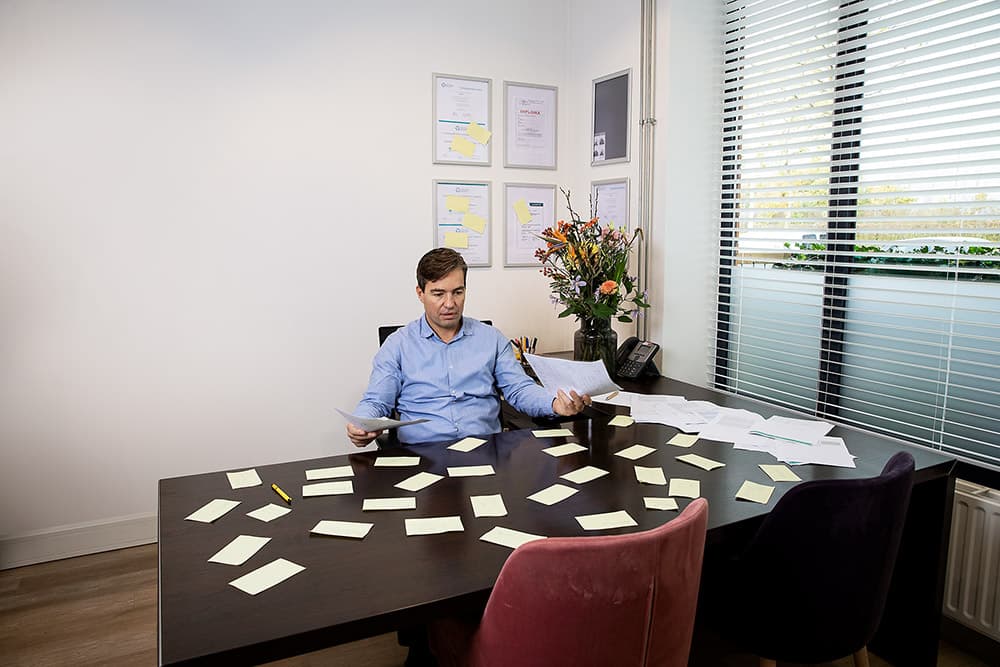
Most clinics run on someone remembering. Someone remembers to call the patient who missed the follow-up. Someone remembers that Wednesday's IV protocol needs a new bag of B-complex. Someone remembers that last month's invoice has not been paid. When “someone” is you, the practice grows as fast as your memory, which is not very fast, and it grows on your evenings.
Practice management software has to move the remembering off the practitioner and onto the file. Appointments that open the record. Reminders that sit on the treatment plan. Invoices that come from the calendar. Follow-up that is queued, not hoped for. That is the difference between owning a clinic and owning a second job.
I have run this practice since 2006. The first ten years I called it discipline. Then I admitted the discipline was a workaround for a chart that did not remember. I started building Practiceflow in 2017 for the owner view: the file remembers, so I do not have to.
Time back for the practitioner, first
The first metric any owner should care about is whether the practitioner still writes notes after hours. Every hour of evening admin is an hour of clinical goodwill you are burning. The way you fix that is not a productivity course. It is a chart that finishes with the visit.
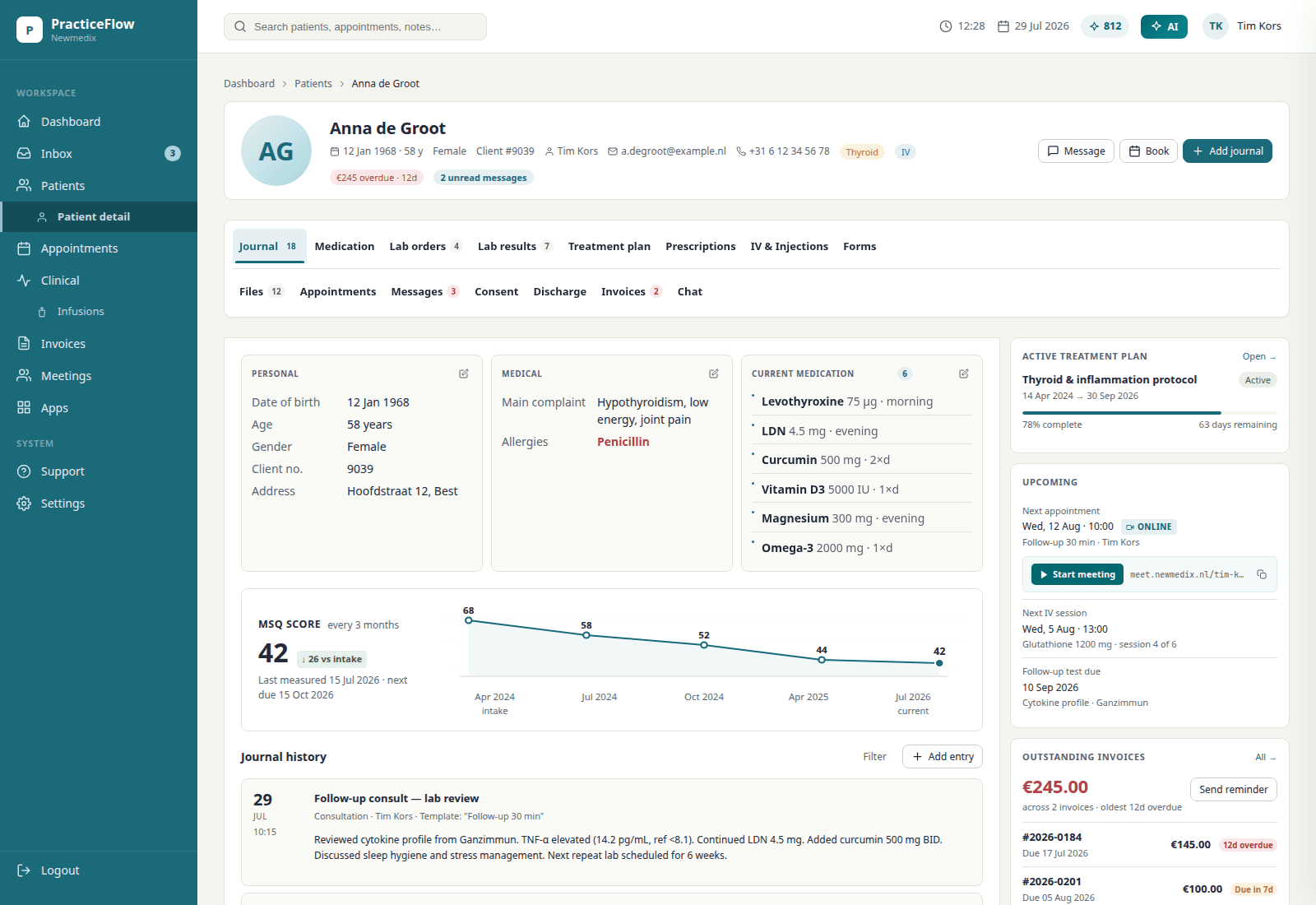
In Practiceflow the interview report, the medication overview, the labs and the emerging plan sit on the same patient file. Templates and snippets you own. When the patient stands up, the note is substantially there. That is the EMR close-up — read that if you want the charting story in full.
Ricky Crompvoets, a functional nutritionist using the product, describes the same shift from the front lines: “With Practiceflow, I can do patient file management at least 50% faster.” His published sentence, not a marketing round.
Follow-up that ships, protocol that lands
A twelve-week protocol only works if week seven happens. In most practices it does not, because the retest is a sticky note and the reminder is a memory. That is not a clinical failure — it is an operations failure that eats revenue.
Practiceflow keeps follow-up on the treatment plan. Retests, tapers, next consult — tied to the plan, not to anyone's head. Automated confirmations and reminders go out by email or SMS from templates you control. That is why Liana Verberg, using the software, says the total treatment is clear from the first appointment to the last, with considerably fewer questions via email or phone. The plan is not a PDF in a coat pocket; it lives in the patient portal, where the patient can open it whenever they forget which supplement was on the morning shelf.
Hidden revenue lives in follow-up that does not ship. I wrote about that in the hidden revenue in your practice. The category page is functional medicine software. This page is the owner argument: automated follow-up is not a nice-to-have; it is the difference between a practice that grows and one that leaks.
One file for the team, not five tools
A solo practice becomes a practice with two practitioners and an assistant. That is where most clinics quietly split into five tools: the calendar in one place, the notes in another, the labs in a third, the invoices somewhere else, the WhatsApp group nobody can search. Now the patient is the integration layer.
Practice management software, done properly, is the decision to stop doing that. In Practiceflow the same patient file is the interview, the meds, the labs, the plan, the quote, the invoice, the portal message. Every plan includes multiple practitioners. Admin and front desk log in for free — only practitioners with their own calendar are paid seats. Onboarding a colleague is days, not a re-implementation cult.
I covered the team shape in multi-practitioner functional medicine software. This page is the owner claim: one file, one product, one invoice line — not a stack.
The financial side runs from the same chart
Quotes should come from the plan, not from a spreadsheet you rebuild each time the protocol changes. Invoices should come from the calendar, not from a Wednesday-evening bookkeeping session. Payments should live in the same product, not in a separate portal you have to log into.
In Practiceflow, quotes are generated from the treatment plan. Invoices can be created automatically based on calendar appointments — or all invoices for a given period in one click. Stripe is live for payments. Superbills, automated billing reminders and pay-at-booking are shipping soon. Fullscript, Rupa Health, Moneybird and WooCommerce integrations are connecting now.
If you want the billing close-up, read billing efficiency for functional medicine. The owner point: revenue leaks in the gap between the plan you wrote and the invoice you meant to send.
KPIs that mean something on a Monday morning
Most EHR dashboards are theatre. Nine metrics on a screen that nobody opens twice. Practice management software should give you a small number of numbers that actually decide next week: how many appointments made, how many no-shows, how many services used, how much follow-up shipped. Practiceflow tracks nine KPIs for exactly that reason — the ones an owner would use to catch a leak before month-end.
A no-show overview that tells you which slot pattern is failing. A daily overview in PDF so the front desk starts Monday knowing what shape the day is. The point is not more data. It is fewer surprises.
Trust, security, compliance — the parts you cannot skip as an owner
HIPAA and GDPR are the published trust lines. SSL A+ (Qualys SSL Labs). Multiple secure backups per day. No patient data on the marketing website. These are not badges — they are the answer you owe your own patients when they ask where their labs are stored. As an owner, you carry that answer, not the vendor.
How to know if it is time to switch
Ask five owner questions. One: does the practitioner still write notes after hours? Two: is follow-up shipping, or is it queued in someone's head? Three: when a new practitioner starts, do they inherit your templates or start a parallel clinic? Four: do quotes come from the plan, or from a rebuilt spreadsheet? Five: can you answer, from one file, what a patient is on, what you have ordered, and when you said you would look again?
If three of those are “no,” you have a stack, not a practice management system. Try the file on one real patient. Free at app.practiceflow.io/signup. No credit card.
From practitioners already using it
These are the published quotes, word for word. No invented reviews.

“With Practiceflow, I keep track of my patient interview reports in a very user-friendly way. Also, I have a particularly good overview of the total treatment for the client. A real 'all-in-one solution': everything is clear from the first appointment to the last treatment. As a result, considerably fewer questions via email/telephone.”

“I work as a functional medicine doctor. With the software, a patient-personalized treatment plan is ready in a matter of minutes. Requesting lab tests and using text templates also saves me a lot of time, so I have more time and focus for the patient.”

“As a functional nutritionist, I use the software to make treatment plans and interview reports. Practiceflow is very user-friendly, easy to use, and easy to learn. With Practiceflow, I can do patient file management at least 50% faster.”
Still writing treatment plans at 9pm?
About 20 questions on how your intakes, lab portals and plan write-ups actually run. You get a report back showing which step is eating the hours.
Questions
Keep reading: Functional medicine software · Functional medicine EMR · Functional medicine EHR · Integrative medicine EHR · Free practice scan
